


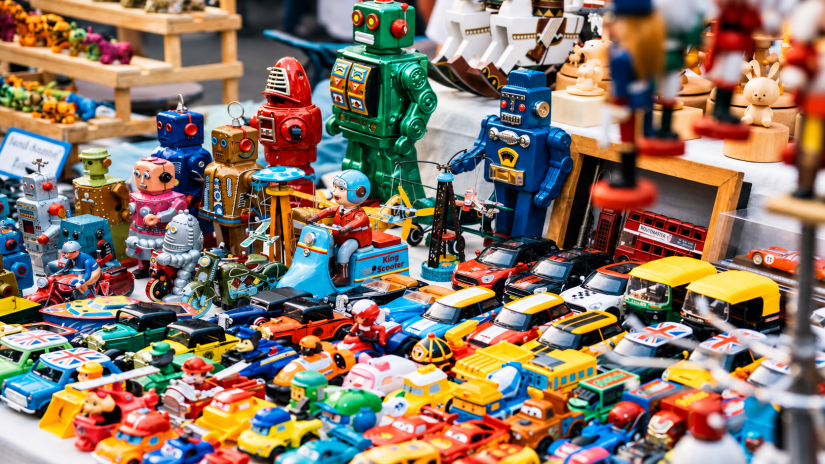


A Better Way to Store Collectibles Without Damaging the Collection
Collectibles tend to outgrow their original shelf, cabinet, or spare-room corner. Once a collection moves into boxes, though, storage becomes less about finding space and more about protecting individual pieces from pressure, poor packing materials, handling, and environmental changes. Proper storage starts with understanding what collectibles're made of and what could damage them.
For collections that need more room outside the house, our storage options in Kelowna include unit sizes from 5x5 through 10x30. Our units are 100% climate-controlled, and our property uses secure keyless access and 24-hour camera monitoring. Those features matter most when the items you're storing are difficult or expensive to replace.
Sort the Collection Before Packing It
Don't start by putting everything into the nearest available box. Separate collectibles by material, size, fragility, and the type of protection they require. A stack of vintage paper items shouldn't be packed the same way as ceramic pieces, framed photographs, or fabric memorabilia.
This is also the right time to inspect each piece. Look for existing cracks, loose parts, staining, mould, pests, or other deterioration before an item goes into long-term storage. Packing a damaged or contaminated object without noticing the problem can make it much harder to identify what happened later.
Create an inventory as you work. It doesn't need to be elaborate. Record what's in each container and give the box a clear number or label. For a valuable collection, photographs provide another useful record of the item's appearance and condition before it was packed.
Choose Packing Materials for the Item
Old moving boxes and newspaper may be readily available, but they're not automatically suitable for a collection you want to preserve. The Canadian Conservation Institute notes that poor-quality materials in contact with paper objects, including some tapes and cardboards, can contribute to deterioration. Its guidance recommends appropriate enclosures and archival storage materials for vulnerable paper objects.
For photographs, documents, prints, stamps, posters, and similar pieces, start with the Canadian Conservation Institute's guidance for caring for paper objects. Archival boxes, folders, sleeves, or other appropriate enclosures create a barrier between the collectible and lower-quality packing materials.
Fragile three-dimensional pieces need a different approach. Give them enough padding that they won't strike each other if a container shifts, but don't cram extra material into the box until delicate parts are under pressure. Choose a container large enough to accommodate the object rather than forcing the object to fit the container.
Store Paper, Photos, and Books Carefully
Paper collectibles are vulnerable to physical damage as well as environmental conditions. Creases, tears, abrasion, stains, poor-quality packing materials, and crowded storage can all cause problems. Keep documents and prints supported instead of bending or rolling them simply to save space.
Photographs deserve similar care. The Canadian Conservation Institute's photograph-care resources identify high humidity, temperature, light exposure, and air pollution among the factors that contribute to deterioration. That makes a stable storage environment important for collections containing older photographs, negatives, or prints.
Books shouldn't be packed so tightly that removing one damages its cover or spine. Avoid overloading a large box with books simply because there's still room inside. Several smaller, manageable containers are easier to move and place without dropping them or putting excessive weight on the contents.
Give Textiles Room and Support
Collectible clothing, quilts, flags, costumes, and other textiles shouldn't automatically be folded into the smallest possible container. The Canadian Conservation Institute recommends flat storage for many textiles because it supports the material and reduces stress on the fibres. It also recommends keeping folds to a minimum.
If an item must be folded, the folds themselves need attention. Acid-free, unbuffered tissue or another suitable support can be used to soften folds rather than leaving a sharp crease under the weight of the textile. Before packing, inspect fabric pieces for signs of mould or insects so a problem isn't sealed into a container with the rest of the collection.
Very large textiles sometimes require rolled storage instead. The right method depends on the material and condition of the object, so valuable or historically significant pieces may warrant advice from a professional conservator before they're packed.
Protect Figures, Models, Ceramics, and Display Pieces
Three-dimensional collectibles have their own weak points. Figurines may have narrow limbs or accessories, models can contain small projecting parts, and ceramic pieces can chip where two objects touch. Wrap and support each fragile item individually rather than relying on one layer of padding around an entire group.
Don't use a heavy collectible as the foundation for a stack simply because it fits neatly at the bottom. Weight from the boxes above can still damage the container or its contents. Shelving can be useful for keeping fragile collections organized without building tall stacks that need to be moved every time you want something from the bottom. Keep the heaviest containers low. Lighter and more delicate boxes belong above them, with enough room to remove a container without dragging it across another one.
Think About Climate Control for Sensitive Collections
Some collectibles tolerate ordinary household conditions better than others. Paper, photographs, textiles, books, wood, and certain modern materials can be affected by inappropriate temperature or humidity conditions.
At our Kelowna facility, all units are climate-controlled. That matters when you're deciding where to keep a collection containing environmentally sensitive materials rather than ordinary household goods. Climate control doesn't replace proper packing, though. A photograph in an unsuitable enclosure or a fragile figure packed under a heavy box can still be damaged.
For mixed collections, pack by material instead of treating climate control as the only precaution required. A collection of photographs, vintage clothing, books, and ceramic figures may occupy one unit, but those groups still need different enclosures and physical support.
Plan the Unit Around Retrieval
A well-packed collection becomes difficult to manage if every box has to come out before you can reach the one you need. Leave a practical path through the unit and group related containers together. Labels should face the aisle instead of the wall.
Your inventory becomes useful here. Instead of opening several boxes to find one item, you can check the box number first. This also reduces unnecessary handling, which is especially useful for fragile paper, photographs, and pieces with delicate components.
The same planning helps if the collection is stored alongside other belongings. Keep furniture, household boxes, or temporary items from blocking the collectibles you expect to access. Our guide to summer storage for students covers similar planning for books, electronics, furniture, and other belongings when space is being used temporarily.
Consider Security Along With Preservation
Proper packing protects a collectible from physical damage, but the storage property itself is another part of the decision. Our facility uses 24-hour camera monitoring and secure keyless access. We discuss those considerations further in our guide to why secure self storage matters.
For higher-value collections, keep your own inventory and photographs even when the collection is stored away from home. Check your insurance coverage as well. Storage facility security features and insurance serve different purposes, so don't assume one automatically replaces the other. Airport Village Self Storage is locally owned and operated in Kelowna at 3525 Kel Mac Court. If you're storing a collection because you're clearing space at home, moving, or reorganizing a larger group of belongings, knowing exactly what is in each container will make the eventual move back out much easier.
Give the Collection Enough Space
The smallest possible footprint isn't always the right goal for collectibles. Fragile objects need room for padding, textiles may need to lie flat, and paper collections shouldn't be squeezed into containers that bend their edges. Choosing a unit should account for how the collection needs to be packed, not only its unpacked volume.
Our available sizes range from 5x5 to 10x30, so the amount of space needed will depend on the collection and anything stored alongside it. Before choosing, measure packed containers and larger display pieces rather than estimating from what the collection looks like on a shelf.
Store the Collection So You Can Enjoy It Later
Good collectible storage is mostly about avoiding preventable damage. Use packing materials suited to the object, support fragile pieces, keep an inventory, and arrange the unit so you don't have to repeatedly move delicate boxes. For sensitive materials, pay attention to environmental conditions as well as physical protection.
If the collection has outgrown the space available at home, you can explore storage options from Airport Village Self Storage and review the available storage resources for Kelowna and nearby needs. Give the collection enough space to be packed correctly, rather than choosing a smaller footprint that requires fragile pieces to be crowded or heavily stacked.


